
Medical light treatment · Chaska, Minnesota
Narrowband UVB Phototherapy in Chaska, MN
Narrowband UVB (NB-UVB) phototherapy is a dermatologist-supervised light treatment that may help certain inflammatory, itchy, and pigment-related skin conditions, including psoriasis, vitiligo, eczema, and others.
Scenic Dermatology offers NB-UVB phototherapy at our Chaska clinic for appropriate patients. We help patients understand whether it makes sense for their diagnosis, skin type, medical history, medications, treatment goals, and ability to follow a consistent schedule. The goal is a practical plan that is medically appropriate and realistic to follow.
The practical question
Phototherapy is a treatment course, not a one-time light session.
The dose begins cautiously and may change over time. Consistent visits, brief skin-response checks, and communication about missed appointments or reactions are part of the plan.
- Confirm the condition and treatment areas.
- Review medicines, UV sensitivity, and relevant skin history.
- Decide whether the visit schedule is realistic.
A prescribed medical treatment
What Is Narrowband UVB Phototherapy?
Phototherapy uses a controlled light source to treat certain skin diseases. “Narrowband” means the equipment delivers a selected portion of ultraviolet B light using a prescribed dose and clinical monitoring.
Phototherapy may be worth discussing when a skin condition involves multiple areas, remains active despite topical treatment, or would benefit from a treatment option directed at the skin rather than the whole body. It is not necessarily the best option for every rash or every patient.
The goal depends on the diagnosis. For psoriasis or eczema, treatment may be used to reduce inflammation and itching. For vitiligo, it may be used to encourage repigmentation. Response is gradual and individual; NB-UVB is not a guaranteed cure.
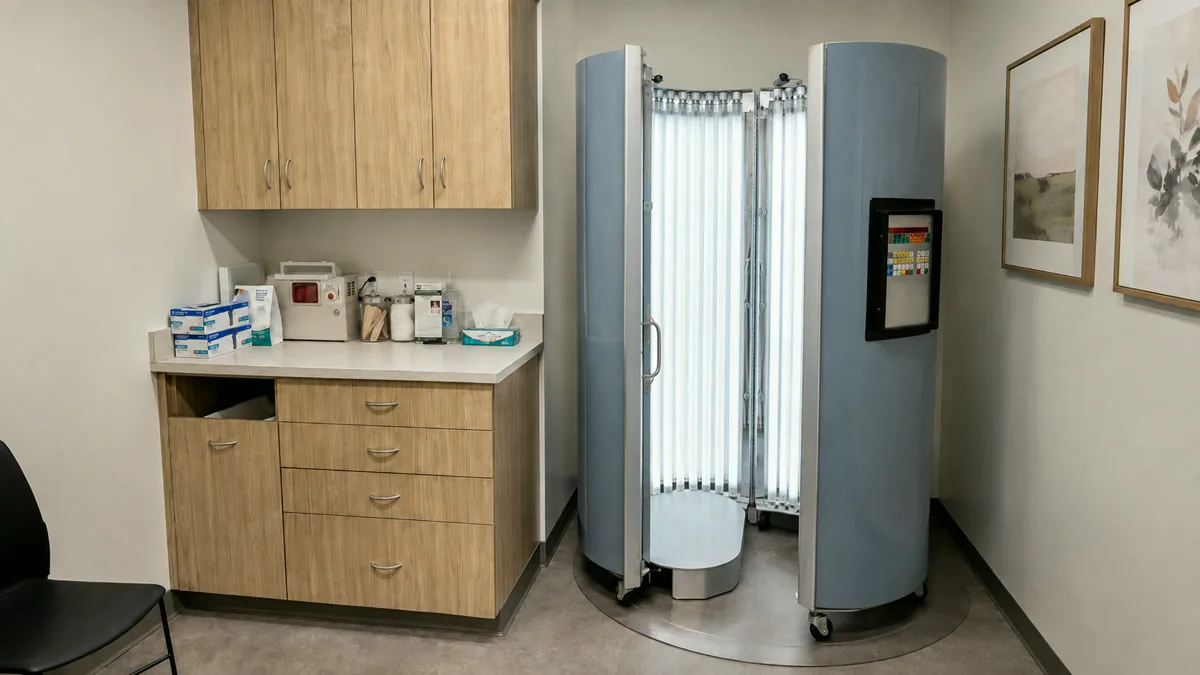
A whole-body booth can expose larger treatment areas efficiently while protective eyewear and any directed covering help limit exposure where treatment is not intended. The dose is prescribed rather than chosen by the patient.
Do not use tanning beds or sunlamps to treat a skin condition or supplement prescribed NB-UVB. Scenic Dermatology does not recommend tanning beds or sunlamps as treatment. Medical NB-UVB uses a prescribed dose, protective measures, and clinical monitoring. Red-light and cosmetic LED treatments use different wavelengths and are not substitutes for NB-UVB.
From evaluation to adjustment
How a Phototherapy Course Works
Phototherapy treatments are typically brief. During treatment, the appropriate areas of skin are exposed to controlled narrowband UVB light for a carefully planned amount of time. Eye protection is used, and certain sensitive areas may need to be covered depending on the treatment plan.
- EvaluateConfirm the diagnosis and discuss whether NB-UVB fits your skin, health history, goals, and schedule.
- PrepareReview medicines and skin products, identify areas to treat or protect, and use the directed protective eyewear.
- Treat and checkReceive a prescribed exposure, then report redness, tenderness, burning, itching, blistering, or other unexpected reactions.
- Adjust the planChange or hold the dose when needed and judge progress over a series of visits rather than after one session.
Practical details
What This Course May Ask of You
- Repeated visits: Depending on the diagnosis and plan, treatment may be scheduled two or three times a week for several weeks. Your prescribed schedule may differ.
- Brief exposure, variable total visit: Light exposure is often short, but check-in, changing, positioning, skin review, and office flow also take time. Contact Scenic Dermatology to confirm current scheduling details.
- Consistency: Missed visits can affect how the next dose is chosen and may make the course less effective. Tell the team when the schedule changes.
- Gradual assessment: Improvement usually requires a series of treatments. Results and the point at which a course should continue, change, or stop vary.
- Coverage and referrals: Referral requirements depend on your insurance plan. Coverage, prior authorization, network status, and out-of-pocket cost also vary. Confirm benefits with your insurer and review Scenic Dermatology’s insurance information.
Before a session: Follow the care team’s directions about skin products, medicines, clothing, and sun exposure. Do not use tanning beds or sunlamps or deliberately increase sun exposure during a prescribed course.
A related light treatment
How NB-UVB Compares With PUVA
NB-UVB and PUVA both use ultraviolet light, but they are not interchangeable. The choice depends on the diagnosis, prior treatment, medicines, safety history, and the practical demands of a treatment course.
| Treatment | Practical distinction |
|---|---|
| Narrowband UVB (NB-UVB) | Uses a selected UVB range without a light-sensitizing psoralen medicine. The dose is prescribed and adjusted according to skin response, with protective measures and clinical monitoring. NB-UVB is the more commonly used form of medical phototherapy today. |
| PUVA | Combines UVA light with a psoralen medicine that increases light sensitivity and requires additional medication and eye-safety precautions. It is used much less often today, and its availability is limited. |
Candidacy and precautions
Safety Questions to Review Before and During Treatment
NB-UVB can be useful for many patients, but ultraviolet treatment is not risk-free and is not appropriate for every diagnosis or medical history. Together, we can weigh the potential benefit, treatment burden, alternatives, and your individual risks.
Call the practice before your next session if you develop marked tenderness, a burn, blistering, or another unexpected reaction. Seek urgent medical care for severe symptoms or a medical emergency.
Diagnosis determines the goal
Conditions That May Be Treated With NB-UVB
Phototherapy is considered because of a specific diagnosis—not simply because a rash is widespread or itchy. Common conditions for which a dermatologist may discuss NB-UVB include:
Explore skin conditions Scenic Dermatology evaluates. If the diagnosis is uncertain, schedule a dermatology evaluation rather than choosing a light device based on symptom photos or product advertising.
Dermatologist-led treatment
The Light Is Only One Part of the Plan
Scenic Dermatology is an independent, family-owned Chaska practice led by William Miller, MD, FAAD, a board-certified dermatologist. Phototherapy decisions are connected to the diagnosis, other treatments, health history, skin response, and what is realistic to maintain.
For some patients, NB-UVB is used by itself. For others, it is one part of a broader plan that may include topical treatment, medication, skin-care guidance, or a different treatment pathway. The goal is not to keep a course going automatically; it is to determine whether it is helping enough to justify the burden and exposure.
Helpful before you schedule
Narrowband UVB Phototherapy Frequently Asked Questions
Should I use a tanning bed or sunlamp with NB-UVB?
No. Scenic Dermatology does not recommend tanning beds or sunlamps for treating skin disease, replacing a missed session, or supplementing prescribed NB-UVB.
How often is phototherapy given?
Many courses involve two or three visits a week for several weeks, but the prescribed schedule depends on the condition, response, missed visits, and clinical plan. Contact Scenic Dermatology to confirm the schedule prescribed for your course.
How long does each treatment take?
The light exposure itself is often brief, especially early in a course, but the total visit also includes check-in, preparation, positioning, and any needed skin-response review. Ask the practice for current scheduling details rather than planning around the exposure time alone.
When will I know whether NB-UVB is working?
Response is usually judged over a series of treatments, not after one visit. Timing varies by diagnosis, body area, disease activity, dose, consistency, and individual response. Your dermatologist can define what progress would justify continuing or changing the course.
What should I do if I miss a visit?
Tell the phototherapy team. A gap in treatment can change how the next dose is selected. Do not try to make up for a missed session with extra sunlight, a tanning bed, or a sunlamp.
Can I use my usual skin products before treatment?
Ask before the course begins and report product changes. Some medicines and topical products can alter ultraviolet sensitivity or interfere with treatment. Follow the care team’s instructions for the day of a session.
Do I need a referral for a phototherapy evaluation?
Referral requirements depend on your insurance plan. You may request an evaluation with Scenic Dermatology, but confirm referral, network, and prior-authorization requirements with your insurer before treatment.
Does insurance cover narrowband UVB phototherapy?
Coverage varies by insurer, diagnosis, network, medical-necessity criteria, and prior-authorization rules. Scenic Dermatology can provide information needed for a plan, but you should confirm benefits and out-of-pocket cost directly with your insurer.
What should I bring to a phototherapy evaluation?
Bring or be ready to review your current medicines and supplements, skin products, prior treatments, tanning-bed or sunlamp use, other ultraviolet exposure, relevant skin cancer or light-sensitivity history, and the questions that matter most. Photographs of recent flares can be useful when symptoms change over time.
Related care
Continue With the Question That Matters Most
A practical next step
Find Out Whether Phototherapy Fits Your Diagnosis and Schedule
Request a dermatology evaluation at Scenic Dermatology in Chaska. We can review the condition, prior treatment, safety considerations, and whether an NB-UVB course at Scenic Dermatology is a reasonable next step.