
Eczema care · Chaska, Minnesota
Eczema Treatment in Chaska, MN
Persistent itch, dry or inflamed skin, and recurring flares can disrupt sleep, school, work, and family routines. A dermatology visit can help clarify whether the rash is eczema, what may be making it worse, and which treatment steps fit.
Scenic Dermatology evaluates eczema and atopic dermatitis in children, teenagers, and adults. The goal is a practical plan for calming the current flare, protecting the skin barrier, and reducing future disruption.
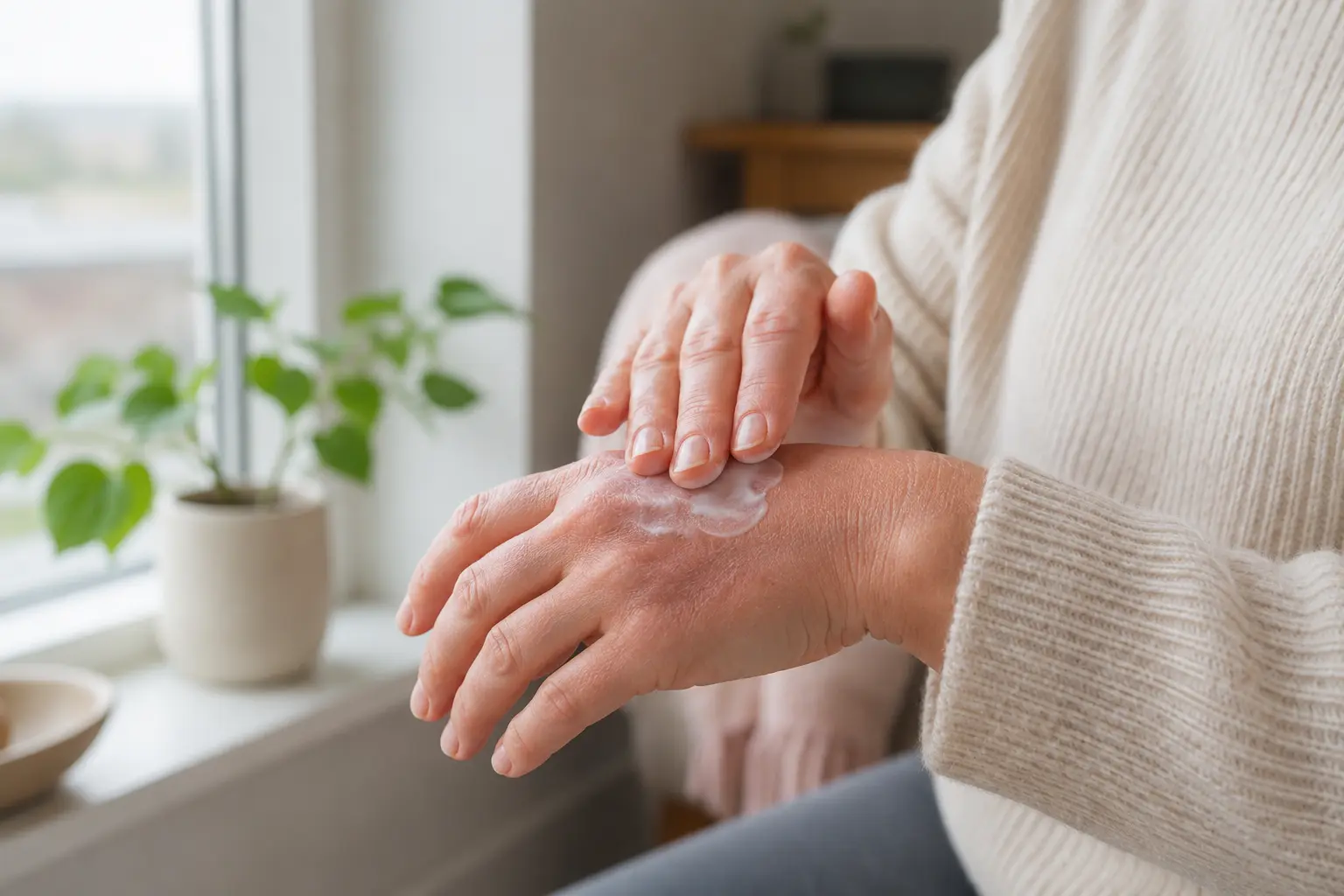
What the visit can clarify
Not every itchy rash needs the same treatment.
- Is this atopic dermatitis or another type of rash?
- Which skin-care and prescription steps fit this body area and age?
- Could contact allergy, infection, or another condition be complicating the flare?
Start with the pattern
Understanding Eczema and Atopic Dermatitis
Eczema is an umbrella term for conditions that can cause itchy, inflamed skin. Atopic dermatitis is the most common form. Irritant or allergic contact dermatitis, hand eczema, nummular eczema, dyshidrotic eczema, and other rashes can overlap in appearance or occur together. The distinction matters because a plan that helps one pattern may not address another.
Atopic dermatitis involves a less effective skin barrier and an overactive inflammatory response. Skin loses moisture more easily and becomes more vulnerable to irritation. Scratching then damages the barrier further, creating an itch-scratch cycle that can keep a flare going.
Eczema can look different by age, body area, skin tone, and stage of a flare. Possible findings include dry or rough patches, intense itch, swelling, small bumps, thickened skin, cracks, oozing, crusting, and color change after inflammation. Inflamed areas may look pink or red, purple or gray, deep brown, or darker or lighter than the surrounding skin.
Infants often develop eczema on the cheeks, scalp, or outer arms and legs. In older children and adults, it commonly affects folds of the elbows and knees, hands, face, eyelids, neck, ankles, or other areas. These are patterns, not rules, and a photograph cannot confirm the diagnosis.
Eczema is not contagious. You cannot catch atopic dermatitis by touching a rash, sharing objects, or spending time with someone who has it.
Deciding when to come in
When an Eczema Evaluation Is Especially Useful
Consider scheduling a dermatology visit when:
- itch or discomfort is disrupting sleep, school, work, exercise, or daily routines;
- the rash keeps returning despite a consistent gentle skin-care routine;
- the face, eyelids, hands, feet, skin folds, or another sensitive area is involved;
- skin is cracking, bleeding, weeping, painful, warm, or developing yellow or honey-colored crust;
- over-the-counter products are not helping or seem to make the rash worse;
- you are uncertain whether the problem is eczema, contact dermatitis, psoriasis, infection, or another condition; or
- a child has a persistent or widespread rash and the care routine is becoming difficult to maintain.
Seek prompt medical care for rapidly spreading redness, significant pain, fever with a worsening rash, eye involvement, or widespread blisters. These findings need timely assessment rather than routine online advice.
A flare does not always mean the same trigger is responsible. Weather, sweat, friction, harsh or fragranced products, frequent handwashing, illness, stress, and exposure to an irritant can all matter. Sometimes the important question is whether the diagnosis or treatment needs to change.
Triggers, allergy, and lookalikes
Why Eczema Flares—and Why Testing Is Selective
Atopic dermatitis usually reflects a combination of skin-barrier weakness, immune inflammation, genetics, and environmental exposures. A trigger may aggravate eczema without being its single cause. The useful approach is to identify repeatable patterns and remove avoidable irritants while still treating the underlying inflammation.
Eczema is not automatically a food allergy. Broad food panels, routine skin-prick tests, and unsupervised elimination diets usually do not explain a chronic eczema pattern and can create unnecessary restriction, especially for children. Testing should answer a focused clinical question.
Formal dermatologic patch testing is different from skin-prick or blood allergy testing. It may be considered when allergic contact dermatitis is suspected—for example, when a rash has an unusual distribution, changes after a product or exposure, involves the hands or eyelids, or continues despite an otherwise appropriate eczema plan. Patch testing is not needed for every person with eczema.
Other conditions can mimic or complicate eczema, including contact dermatitis, psoriasis, fungal infection, scabies, medication reactions, and bacterial or viral infection. Examining the distribution, surface change, timing, exposures, and treatment response helps narrow the possibilities.
Build the plan in layers
How Eczema Treatment Is Chosen
No single cream or routine is best for every case. The plan depends on the diagnosis, age, body area, severity, signs of infection, prior response, other health conditions, treatment burden, and what can realistically be followed at home.
The goal is control, not a promise of cure. Eczema often improves and flares over time. A useful plan defines what to use for daily care, what to do at the first sign of a flare, how long to use each medicine, and when to contact the office.
Children, teens, and family routines
Eczema Care Has to Work at Home
For a child or teenager, eczema can affect sleep, concentration, sports, clothing choices, and confidence. It can also turn bathing, moisturizing, and medication into a difficult family routine. A realistic plan should be clear enough for caregivers and, as children grow, simple enough for them to take on more of their own care.
Medication instructions should identify the body area, amount, frequency, and stopping point. A treatment that is appropriate for thicker skin on an arm or leg may not be the right choice for an eyelid, face, or skin fold. Bring the products and medicines already being used—or photographs of their labels—so the plan can be specific.
Photographs of a recent flare can also help when the skin is quieter on appointment day. Explore Scenic Dermatology’s pediatric skin-condition care for other common childhood concerns.
From the rash to a workable routine
What to Expect at an Eczema Visit
- Describe the patternReview when the rash began, where it appears, how it feels, what changes it, and how it affects sleep or daily life.
- Examine the skinLook at the distribution and surface findings and consider eczema, contact dermatitis, infection, or another diagnosis.
- Review what you useDiscuss moisturizers, cleansers, prescriptions, over-the-counter products, exposures, prior response, and barriers to following the routine.
- Leave with next stepsDefine daily care, flare treatment, warning signs, when to follow up, and what to consider if the first plan is not enough.
Useful to bring
Help the Appointment Reflect the Real Flare
- Photographs showing the rash when it was more active or in another body area.
- The names, packages, or label photographs of skin-care products and medicines already tried.
- A short timeline of what helped, what irritated the skin, and how quickly the rash returned.
- Questions about medication amounts, body sites, refills, school or daycare instructions, and the next step if the plan does not work.
Dermatologist-led care
A Plan Should Be Specific Enough to Follow
Scenic Dermatology is an independent, family-owned Chaska practice led by William Miller, MD, FAAD, a board-certified dermatologist. Eczema care connects the diagnosis to clear instructions for daily skin care, active flares, sensitive body areas, and follow-up.
That plan may change as the skin, season, age, or treatment response changes. The useful endpoint is not the longest product list. It is knowing which few steps matter now and when the situation deserves reassessment.
Helpful before you schedule
Eczema Treatment Frequently Asked Questions
Are eczema and atopic dermatitis the same?
Atopic dermatitis is the most common type of eczema, but eczema also includes other inflammatory rashes such as contact, nummular, hand, and dyshidrotic eczema. Clarifying the pattern helps determine which treatment and testing make sense.
Is eczema caused by an allergy?
Not usually by one simple allergy. Atopic dermatitis involves the skin barrier and immune inflammation. Irritants and allergens can worsen some cases, but broad food or environmental allergy testing is not routinely useful. Patch testing may help when allergic contact dermatitis is specifically suspected.
Are topical steroids safe for eczema?
Topical corticosteroids are effective and important for many flares. Safety depends on using the right strength and amount on the right body area for the directed length of time. Ask for written instructions if you are uncertain where, how often, or how long to use one.
Can eczema be cured permanently?
There is no guaranteed permanent cure for atopic dermatitis. Many people can achieve long periods of good control with consistent barrier care, prompt flare treatment, and adjustments when the pattern changes. The goal is fewer, shorter, and less disruptive flares.
Can babies, children, and teenagers be treated for eczema?
Yes. Treatment is adjusted for age, body area, severity, and the family routine. Persistent itch, sleep loss, signs of infection, sensitive-area involvement, or uncertainty about medicine use are good reasons to ask for an evaluation.
When is patch testing considered?
Patch testing may be useful when the distribution, exposure history, or poor treatment response suggests allergic contact dermatitis. It is a delayed skin test for contact allergens, not a food-allergy test, and it is not necessary for every eczema case.
What happens when creams are not enough?
First, the diagnosis, product use, adherence, infection, and possible contact allergy should be reviewed. For selected moderate, severe, widespread, or persistent eczema, a dermatologist may discuss phototherapy or an oral or injectable treatment, including its risks, monitoring, cost, and practical burden.
Related care
Continue With the Question That Fits
A practical next step
Get a Clearer Plan for the Rash and the Next Flare
Request an eczema evaluation at Scenic Dermatology in Chaska. We can review the pattern, prior treatment, skin-care routine, and the next steps that fit your age, body areas, and goals.