
Cosmetic procedure · Chaska, Minnesota
Microneedling in Chaska, MN
Microneedling can soften the appearance of selected acne scars, uneven texture, enlarged-looking pores, and fine lines by creating a controlled skin-remodeling response. The change is gradual, and a series of treatments is often considered.
Scenic Dermatology starts with the concern, skin history, and realistic alternatives rather than promising that one procedure fits every scar or skin type.
Before choosing treatment
Three questions shape a useful plan.
- Is the concern an active skin condition or a change left behind after it healed?
- Does the scar or texture pattern respond reasonably to microneedling?
- Do your skin history, medications, downtime, and budget make the plan practical?
Match the method to the concern
Where Microneedling May Fit
Microneedling uses fine needles to create controlled channels in the skin. The healing response can gradually remodel collagen and soften selected surface irregularities. It does not resurface every concern equally, and it cannot completely remove a scar.
| Starting concern | Where microneedling may fit | What needs clarification first |
|---|---|---|
| Shallow or rolling depressed acne scars | Microneedling is a well-established option for many depressed acne scars and can gradually smooth texture and make scars less noticeable. | Active acne should usually be controlled first. Very deep, narrow, tethered, raised, or mixed scars may benefit from another treatment or a combination approach. |
| Uneven texture or enlarged-looking pores | Microneedling can improve overall skin texture and may make enlarged-looking pores less noticeable as the skin remodels. | Acne, irritation, or other skin conditions can also affect texture and pore appearance and may be worth addressing as part of the treatment plan. |
| Fine lines | Microneedling can gradually soften fine lines and improve overall skin texture through collagen remodeling. | Expression lines, volume loss, and more significant skin laxity are different concerns and may respond better to other or combined treatments. |
| Surgical scars or stretch marks | Microneedling may improve the texture and visibility of selected scars and stretch marks over a series of treatments. | Scar type, location, age, and healing history help determine whether microneedling is a good fit. Raised or keloid scars generally require a different approach. |
| Dark marks or uneven tone | Microneedling may help improve uneven tone in selected patients and can also be useful when discoloration occurs alongside texture concerns. | The cause of the discoloration matters. Post-inflammatory marks, melasma, and active inflammation may call for different or combined treatment strategies. |
Controlled treatment, individualized settings
How Microneedling Works
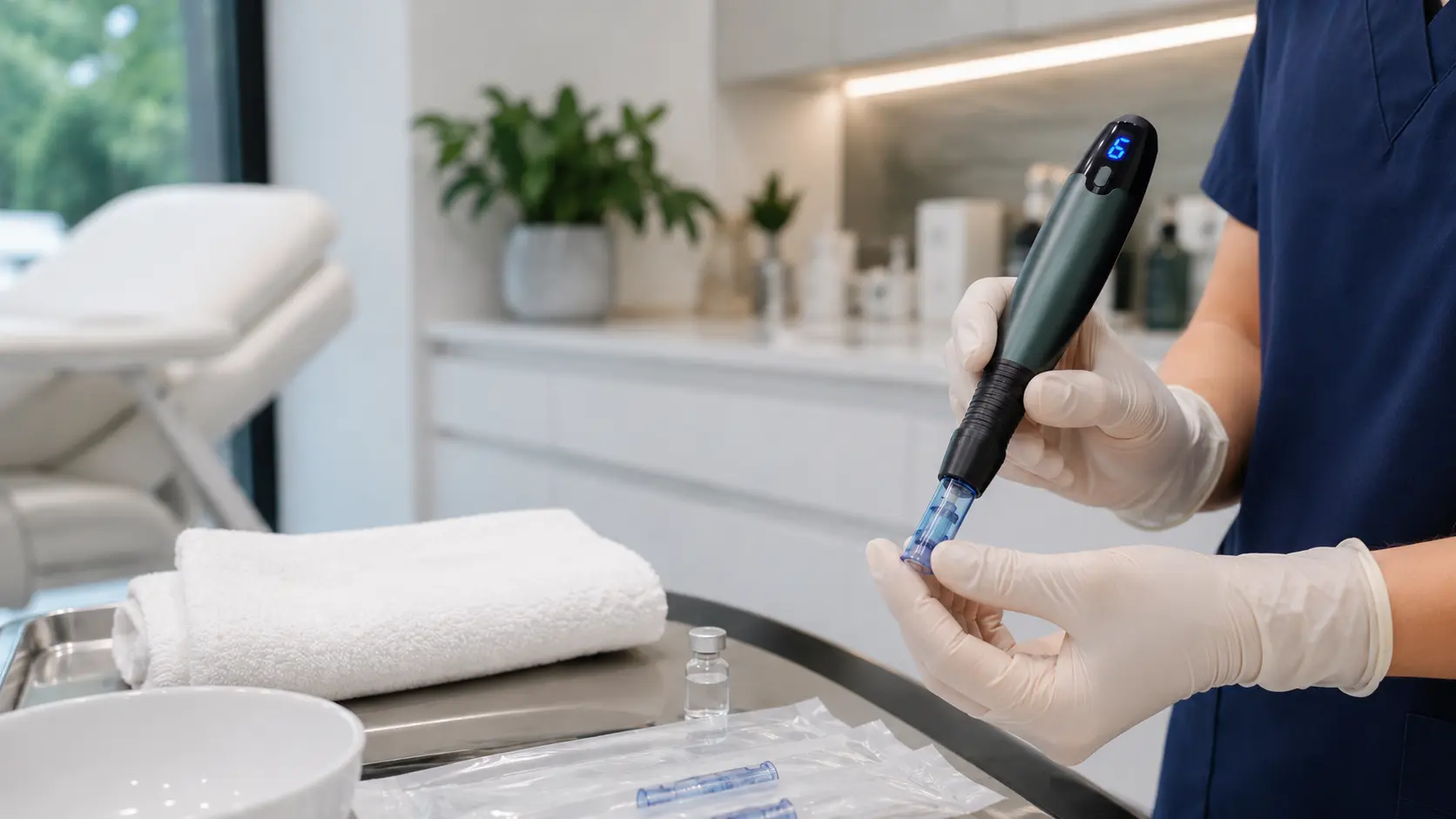
A microneedling device moves sterile needles through the skin at controlled depths. These closely spaced microchannels prompt a wound-healing response that can gradually remodel collagen and soften selected surface irregularities.
Deeper or more aggressive treatment is not automatically better. The concern, body area, scar pattern, skin tone, healing history, and tolerance for recovery all affect the treatment plan.
Microneedling works differently from laser resurfacing, chemical peels, and microdermabrasion. It uses controlled micro-injuries to encourage gradual skin remodeling, making it a versatile option for concerns such as acne scars, uneven texture, enlarged-looking pores, and fine lines.
Safety starts with screening
A Reasonable Candidate Is More Than a Skin Type
People with a wide range of skin tones may be considered for microneedling, but no treatment is risk-free for every complexion. Baseline pigment, recent tanning or sun exposure, the condition being treated, device settings, and aftercare all affect planning. Temporary or persistent darkening or lightening can occur.
A visit may support treatment when
- The target is a scar, texture change, pore appearance, or fine line that may respond to controlled remodeling.
- Active acne or another inflammatory condition is controlled.
- Expectations allow for gradual, partial improvement and more than one treatment.
- The expected recovery and aftercare fit work, school, exercise, travel, and sun exposure.
Treatment may need to wait or change when
- There is active inflammatory acne, infection, herpes outbreak, rash, open skin, or a recent procedure in the area.
- There is a history of keloids or difficult healing, a bleeding concern, immune suppression, or a condition that affects wound healing.
- Medication or supplement use could affect bleeding, healing, inflammation, or sun sensitivity.
- Pregnancy, breastfeeding, a recent tan, or another health circumstance makes an elective procedure inappropriate now.
Bring an accurate medication and procedure history. Screening is individualized; this list is not a substitute for medical evaluation or a complete exclusion list.
Before, during, and after
A Treatment Course Built Around Healing
Microneedling is a procedure, not a one-visit filter. The evaluation, treatment settings, recovery, and decision to repeat it are connected.
- Evaluate the targetReview scar or texture pattern, skin tone, active conditions, health history, prior procedures, and realistic alternatives.
- Prepare a measured planConfirm the treatment area, comfort approach, device plan, expected sensation, risks, and aftercare before starting.
- Treat in controlled passesThe device creates closely spaced microchannels. Pressure, pricking, warmth, and pinpoint bleeding may occur.
- Allow recovery and remodelingProtect the healing skin, judge change gradually, and repeat treatment only when the skin and plan support it.
Plan for visible recovery
What Skin May Look and Feel Like Afterward
The early recovery window
Redness, warmth, tightness, tenderness, mild swelling, and pinpoint bleeding can occur immediately. Skin may then feel dry, rough, itchy, or flaky. Bruising, crusting, and temporary pigment change are also possible. The intensity and duration vary with the treatment area, settings, and individual response.
Protect the healing barrier
Follow Scenic’s procedure-specific aftercare. Use only the products the team has approved, protect the area from sun, and ask when to restart makeup, retinoids, exfoliating acids, acne products, exercise, swimming, or other potentially irritating exposures. Exact timing should be based on the treatment performed and how the skin is healing.
Contact the practice if pain, swelling, blistering, drainage, spreading redness, a cold-sore outbreak, or another reaction is more severe or persistent than expected. Infection, scarring, pigment change, and herpes reactivation are uncommon but important risks to discuss.
Improvement, not erasure
Realistic Results Develop Gradually
A series may be more useful than a single treatment
Because remodeling takes time, the early appearance is not the final result. More than one procedure may be considered, with enough time between treatments for the skin to recover. The appropriate number and spacing depend on the target, treatment depth, response, tolerance for downtime, and whether another method would add more value.
Scar shape affects what is possible
Broad, shallow depressed scars may be more responsive than very deep, narrow, sharply edged, raised, or tethered scars. A mixed acne-scar pattern may need more than one technique. The goal is to soften contrast and texture where feasible, not to promise smooth, scar-free skin.
Maintenance is optional and individualized
Skin continues to age and can develop new inflammation, sun damage, or scars. Some people consider future maintenance, while others stop after an initial course. Photography under consistent lighting and a clear starting goal can make the decision more objective.
Treat activity before its aftermath
Active Acne and Acne Scars Need Different Plans
Microneedling is considered for selected residual scars, not as a primary treatment for active inflammatory acne. Needling through inflamed lesions can aggravate irritation and complicate healing. If breakouts are still frequent, the first priority is usually to control acne and reduce the chance of new scars.
Still dealing with breakouts? Start with acne evaluation and treatment. Once active disease is controlled, residual color and textural scars can be assessed separately.
A dermatologist-led decision
The Best Plan May Include a Different Tool
Scar depth, skin tone, active inflammation, prior procedures, budget, and available recovery time can change the recommendation. A measured cosmetic plan may include microneedling, another approach, a sequence of treatments, or a decision to wait.
Review the context behind the recommendation
Learn more about Scenic’s cosmetic dermatology approach or review Dr. William Miller’s credentials.
Practical questions
Microneedling Frequently Asked Questions
Does microneedling work for acne scars?
It can improve the appearance of selected depressed acne scars, especially broader and shallower patterns. Deep ice-pick, sharply edged, tethered, raised, or mixed scars may need a different or combined treatment. Active acne should be controlled first.
How many microneedling treatments will I need?
More than one procedure is often considered, but there is no responsible universal number. The target, scar depth, treatment settings, healing response, goals, and budget all matter. Your plan should be reassessed rather than automatically repeated.
How much downtime should I expect?
Plan for visible redness and sensitivity rather than assuming there is no downtime. Tightness, swelling, dryness, roughness, flaking, pinpoint bleeding, bruising, or crusting can occur. The intensity and duration vary, so schedule around important events and follow the aftercare provided for your procedure.
Does microneedling hurt?
People may feel pressure, pricking, warmth, or tenderness. Sensation varies by area, treatment depth, and individual sensitivity. The team should review the planned comfort approach and what to expect before treatment; no specific numbing protocol should be assumed before that discussion.
Can people with darker skin tones have microneedling?
Many may be candidates, but “safe for every skin type” is too broad. Baseline pigment, active inflammation, melasma, recent tanning, treatment settings, and aftercare affect the risk of darkening or lightening. An individualized evaluation is important.
Is at-home microneedling the same as an in-office procedure?
No. Consumer rollers and pens do not reproduce a medically planned procedure, and the U.S. Food and Drug Administration has not authorized microneedling medical devices for over-the-counter sale. Reuse, poor technique, and applying products through disrupted skin can increase the risk of injury, infection, pigment change, or scarring.
Can microneedling treat dark spots or uneven tone?
Not every dark mark is an appropriate microneedling target. Post-inflammatory color change, melasma, active inflammation, and true textural scarring are different problems. An evaluation can clarify whether texture and color are occurring together and whether another first step is more appropriate.
Does Scenic combine microneedling with PRP or exosomes?
Do not assume that microneedling at Scenic includes PRP, exosomes, or another biologic add-on. Ask before scheduling if you are seeking a specific combination. A product should not be applied to freshly needled skin merely because it is marketed as enhancing results.
What does microneedling cost?
Microneedling is a cosmetic, generally self-pay service. Scenic will confirm the recommended plan and current cost before treatment so the decision can include the number of visits, expected maintenance, and reasonable alternatives.
Continue With the Question That Fits
Start with a realistic plan
Discuss Whether Microneedling Fits Your Concern
Bring the concern, prior treatments, timing, and questions about recovery. Scenic can help determine whether conventional microneedling or another approach makes sense.