
Why Your Lips Stay Chapped Even When You Use Lip Balm
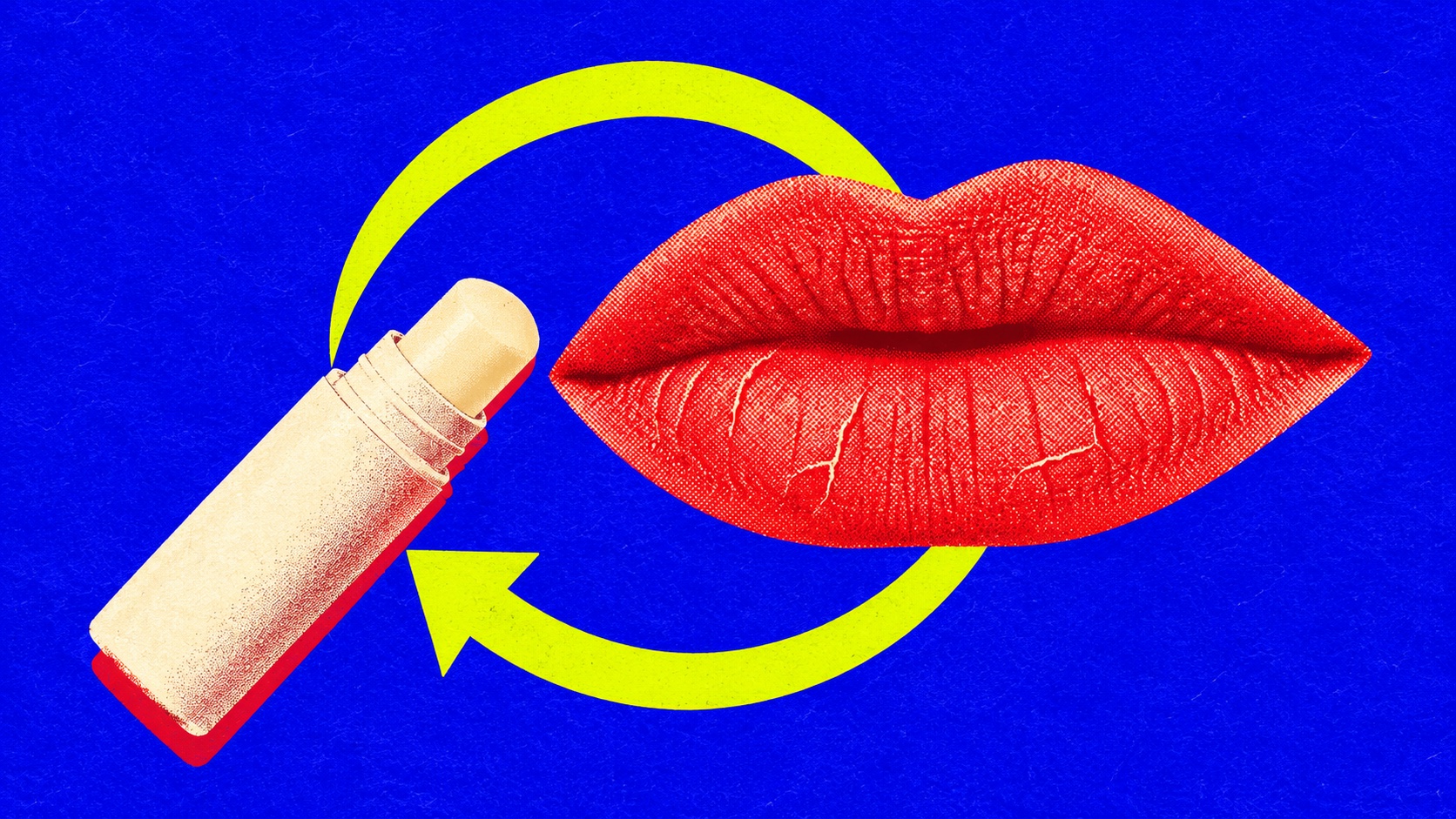
You put on lip balm because your lips feel dry. Ten minutes later they feel tight again, so you put on more. Before you buy another tube, pay attention to what happens when you put it on. If it stings or burns, that isn’t a sign it’s working. The balm itself may be irritating lips that were already chapped.
Cold wind, dry indoor air, and lip licking can all keep the cycle going. The first thing I’d try for evenly dry or peeling lips is a simpler routine, not a more complicated balm.
What to try when lip balm isn’t helping
- Set aside anything that stings. For now, skip flavored, fragranced, plumping, or exfoliating lip products. Peppermint, cinnamon, menthol, and camphor are common ingredients to look for. This doesn’t mean everyone needs to avoid them forever.
- Use plain white petroleum jelly. Look for a product with petrolatum as the only ingredient, not a flavored version. Apply it several times a day and before bed. The job of the ointment is to keep moisture from escaping while the skin heals.
- Catch yourself licking or picking. Licking feels better for a few seconds. Then the saliva dries and you’re right back where you started. Reach for the ointment instead, and leave the loose skin alone.
- Protect your lips outdoors. Plain petroleum jelly isn’t sunscreen. Use a non-stinging lip product with SPF 30 or higher when you’re outside, even in winter. Zinc oxide or titanium dioxide are options if you’re looking for a simple starting point.
Ordinary chapping should be noticeably better within two to three weeks with consistent care. If it isn’t, don’t keep buying new tubes and starting the clock over.
When it might be more than dry lips
They keep itching, burning, or peeling. Something you put on your lips can irritate them, or you can develop a skin allergy to an ingredient. Those can look alike. Stinging by itself doesn’t prove an allergy, and an allergy can develop even to something you’ve used for a long time. Balm, lipstick, and toothpaste flavors are worth mentioning. If it keeps coming back, bring the products or photos of the ingredient lists to your visit. Patch testing can help identify a delayed skin allergy when the history and exam point that way.
It’s mainly at the corners. Cracks where your upper and lower lips meet are a different pattern, called angular cheilitis. Saliva can collect there and irritate the skin. Sometimes yeast or bacteria play a role. If the corners keep splitting or don’t heal, it’s worth getting them checked rather than assuming you need an antifungal.
One spot keeps coming back or never heals. A rough patch in the same spot, especially on the lower lip, is different from general winter chapping. Long-term sun exposure can cause a precancerous change called actinic cheilitis. Have a persistent rough patch, a sore that won’t heal, or a growing or tender bump examined sooner. Don’t wait out the two-to-three-week balm trial for a spot like that.
When to book a visit
If plain petroleum jelly isn’t helping after two to three weeks of simpler care, or the rash keeps coming back, book a dermatology visit for the lip concern. For a broader look at winter skin care, see our dry-skin guide.
For general education. This article can’t diagnose an individual lip rash or lesion.