
Tick Bite Rash in Minnesota: When to Worry and What to Watch For
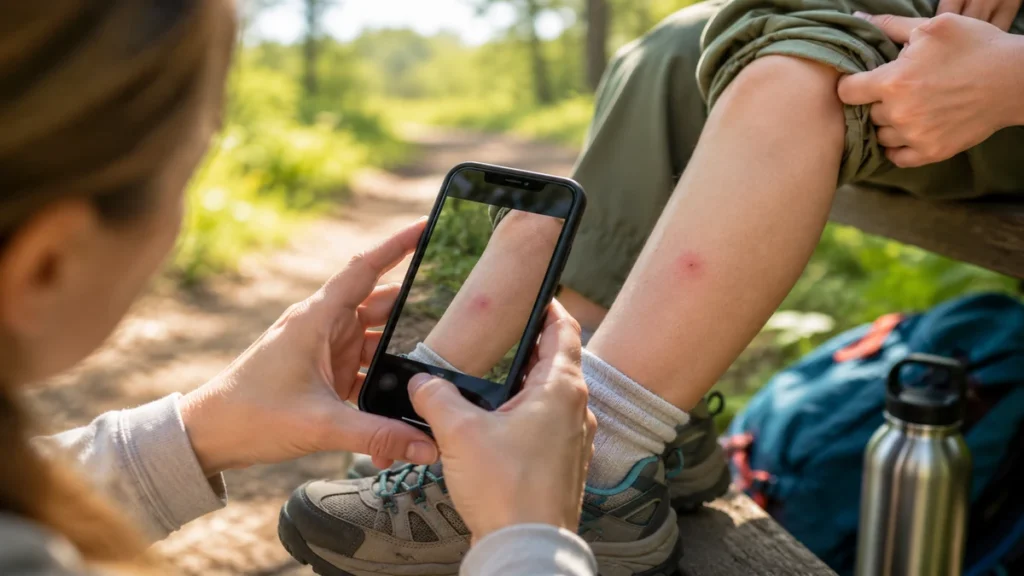
Most tick bites do not lead to illness. A small red bump right after a bite can be a short-lived local reaction. The more useful questions are whether the area is getting larger or changing and whether fever, headache, fatigue, muscle aches, joint symptoms, or neurologic symptoms appear.
In Minnesota, that distinction matters because blacklegged ticks can transmit Lyme disease and several other infections. This guide explains what to do now, what to watch over the next several weeks, and where to seek care if the situation changes.
The short answer
When is a tick-bite rash more concerning?
A small bump that appears immediately, stays small, and begins settling within a day or two is more consistent with a local bite reaction. Contact a clinician for a rash that gradually expands, appears days after the bite, or occurs with fever or other new symptoms—even when it is not shaped like a bullseye.
What should you do after finding an attached tick?
Remove the tick as soon as possible; do not wait for an appointment. The CDC recommends steady removal with tweezers and advises against petroleum jelly, heat, nail polish, or other substances intended to make the tick detach.
- Grasp close to the skin. Use clean, fine-tipped tweezers when available. Hold the tick by its mouth area rather than squeezing its body.
- Pull upward steadily. Use even pressure without twisting or jerking.
- Leave stubborn mouthparts alone. If a small piece remains and does not come out easily with clean tweezers, let the skin heal rather than digging at it.
- Clean the area and your hands. Use soap and water, rubbing alcohol, or hand sanitizer.
- Record the exposure. Note the date and likely location of the bite. If practical, photograph the tick beside a coin and take a well-lit photo of the skin.
- Check for other ticks. Look over the rest of the body, clothing, children, and gear; check pets according to veterinary guidance.
Is a preventive antibiotic needed?
Most tick bites do not automatically need an antibiotic. If the tick may have been a blacklegged tick, may have been attached for 36 hours or longer, and was removed within the past 72 hours, contact a clinician promptly. The exposure location and tick identification also matter. Current IDSA/AAN/ACR guidance includes adults and children in this high-risk assessment; pregnancy, medication safety, allergies, and other individual factors still require clinician review. Do not use leftover antibiotics or wait for symptoms to ask a time-sensitive prevention question.
How can you compare a local reaction with an expanding Lyme rash?
No single feature diagnoses a rash from a webpage or photograph. The pattern over time is more useful than redness alone.
| What to compare | Small local bite reaction | Possible erythema migrans or another concerning rash |
|---|---|---|
| Timing | Appears immediately or soon after the bite. | Often begins after a delay; Lyme symptoms can start 3–30 days after a bite. |
| Change | Stays small and usually begins settling within 1–2 days. | Gradually expands over several days or new areas appear. |
| Appearance | A small bump or limited redness at the attachment site. | A round, oval, solid red, target-like, or partly clearing patch; more than one rash can occur. |
| Sensation | May itch or feel irritated like another minor bite. | May feel warm but is often not very itchy or painful. |
| Other symptoms | The person otherwise feels well. | Fever, chills, headache, fatigue, muscle or joint aches, or swollen lymph nodes may occur—with or without a rash. |
| Next step | Photograph and monitor if it remains small and the person feels well. | Contact a clinician promptly; use urgent care or emergency care when symptoms are severe. |
What can erythema migrans look like besides a bullseye?
The early Lyme disease rash is called erythema migrans. A target or bullseye is one possible appearance—not a requirement. The rash can be a uniformly red or reddish oval patch, can clear somewhat in the center as it grows, or can appear in more than one location. The Minnesota Department of Health’s Lyme rash examples show this range.
- A round or oval patch that enlarges over days.
- A solid expanding patch without visible rings.
- A patch with partial central clearing.
- A target-like or bullseye pattern.
- More than one expanding rash.
Expansion is often more informative than shape. Erythema migrans may feel warm but is rarely very itchy or painful. Ringworm, contact dermatitis, hives, cellulitis, and other bite reactions can sometimes enter the visual differential, so a photograph should not be used to diagnose the rash or rule Lyme disease out.
When can symptoms appear, and what matters beyond the skin?
Early Lyme symptoms can begin 3–30 days after a blacklegged tick bite. Fever, chills, headache, fatigue, muscle and joint aches, and swollen lymph nodes can occur even without a noticed rash. Later signs can include facial drooping, severe headache with neck stiffness, heart palpitations or an irregular heartbeat, dizziness, shortness of breath, nerve symptoms, and marked joint pain or swelling.
Lyme disease is not the only Minnesota concern. Blacklegged ticks can also transmit anaplasmosis, babesiosis, one form of ehrlichiosis, Powassan virus, and hard tick relapsing fever. Those illnesses do not follow one shared rash pattern. A new fever or significant illness after tick exposure deserves medical guidance even when the skin looks unremarkable.
Should you monitor, contact a clinician, or seek urgent care?
Monitor at home
The tick is removed, the spot is small and stable or fading, and the person feels well. Keep a dated photo and watch for expansion, fever, or new symptoms over the next several weeks.
Contact a clinician promptly
The rash expands or changes; fever, headache, fatigue, muscle aches, or joint symptoms develop; a child seems unwell; or the bite may qualify for time-sensitive Lyme prevention. Primary care or urgent care is often the better first stop when symptoms extend beyond the skin.
Seek urgent or emergency care
Do not wait for dermatology for a severe headache, neck stiffness, new facial drooping, confusion, fainting, marked shortness of breath, chest pounding with dizziness, a rapidly worsening illness, or a person who appears very ill. Call 911 for trouble breathing, fainting, confusion, or another possible life-threatening emergency.
Why does Minnesota context matter?
Minnesota is part of the upper Midwest region where Lyme disease occurs, and exposure is not limited to remote woods. Ticks can be encountered near wooded or brushy yard edges, trails, parks, tall vegetation, pets, and cabin areas. Blacklegged tick nymphs are especially active from mid-May through June, while adults can also be active in spring and fall—and on warm winter days above freezing.
After outdoor time, check the scalp and hairline, behind the ears, under the arms, around the waist and groin, behind the knees, between the toes, and in skin folds. The Minnesota Department of Health explains which ticks are common in the state and why blacklegged ticks account for most local tickborne disease.
When can dermatology help with a tick-bite rash?
Dermatology can be useful when the main question is the skin finding and the person is otherwise stable—for example, when a rash is persistent, expanding, visually atypical, or difficult to distinguish from another skin condition. A dermatologist can assess its size, pattern, location, and change over time and help determine whether broader medical care is needed.
When fever, significant fatigue, severe headache, neck stiffness, facial weakness, heart symptoms, shortness of breath, or marked joint swelling is part of the picture, primary care, urgent care, or emergency care may be more appropriate. A tickborne illness can involve much more than the skin.
Have a persistent or changing rash evaluated
If a rash after a tick bite or outdoor exposure is spreading, persistent, or diagnostically uncertain and the person is otherwise stable, Scenic Dermatology in Chaska can evaluate the skin. New patients may request an appointment online. Current patients with a medical question should call the practice rather than send symptoms, photographs, or other private medical information through a general form.
Frequently asked questions
Is a red bump right after a tick bite Lyme disease?
Usually not. A small bump or limited redness that appears immediately and begins fading within 1–2 days is a common local irritation. A rash that appears after a delay, gradually expands, or occurs with fever or other symptoms needs medical guidance.
Can Lyme disease occur without a bullseye rash?
Yes. Erythema migrans can be a solid expanding red or oval patch, can clear partly in the center, or can look target-like. Some people with Lyme disease do not notice a rash. Symptoms and change over time matter more than a perfect shape.
Should I save the tick or have it tested?
A clear photograph beside a coin can help with later identification, and a clinician may advise whether to keep the tick in a sealed container. The CDC does not recommend using commercial tick-testing results to make treatment decisions because a positive tick does not prove infection and a negative tick can give false reassurance. Do not delay care while waiting for a tick test.
What should parents watch for after a child’s tick bite?
Use the same removal and monitoring steps: record the date, photograph the area, and watch for expansion, fever, headache, unusual fatigue, aches, facial drooping, or a child who seems unwell. Contact a clinician promptly for a changing rash or new symptoms. High-risk Lyme prevention can be considered for children when the clinical criteria are met.
Sources
- CDC: What to Do After a Tick Bite
- CDC: Signs and Symptoms of Untreated Lyme Disease
- CDC: Preventing Lyme Disease
- Minnesota Department of Health: About Lyme Disease
- Minnesota Department of Health: Lyme Disease Rashes
- Minnesota Department of Health: Tickborne Diseases and Conditions
- Minnesota Department of Health: Ticks
- IDSA/AAN/ACR: Guidelines for the Prevention, Diagnosis, and Treatment of Lyme Disease